
What gassho zukuri means
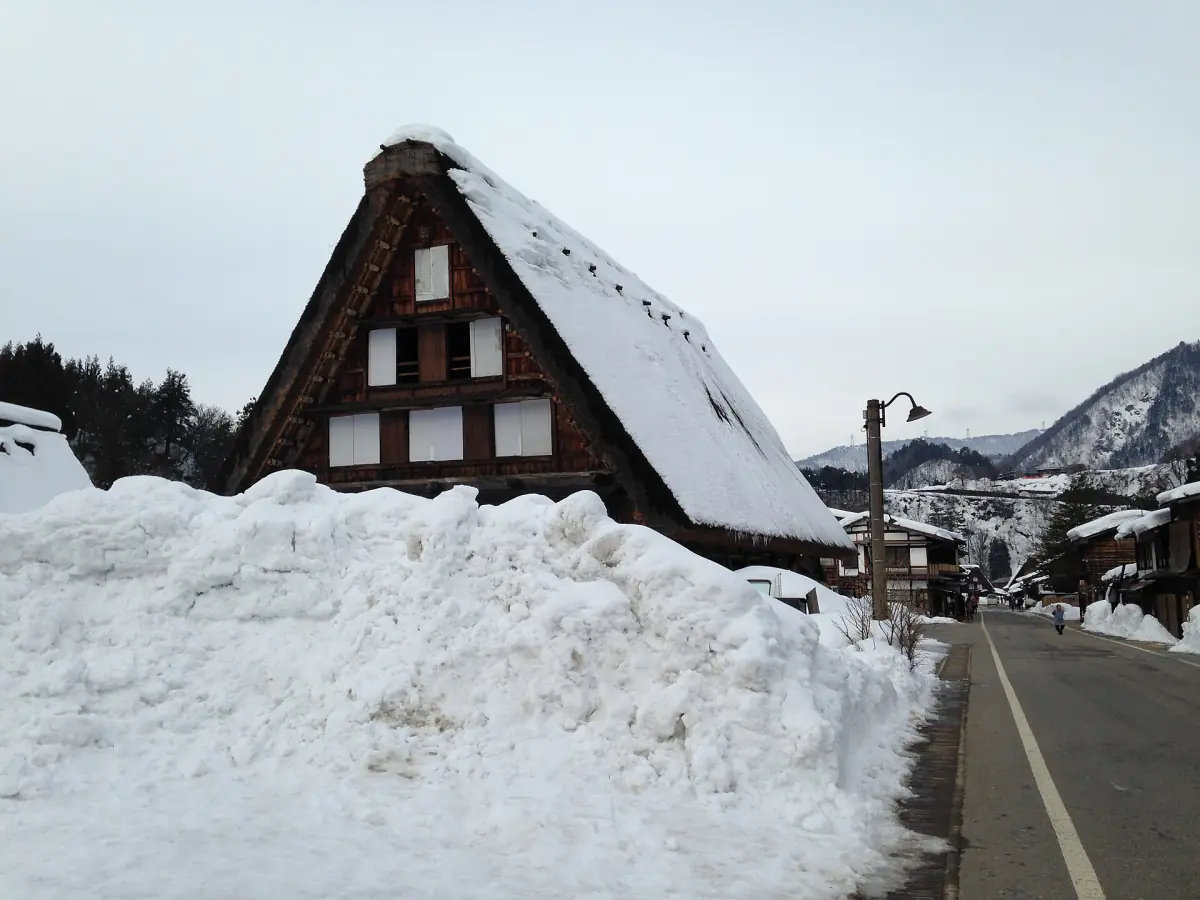
Gassho zukuri is the farmhouse style of Shirakawa-go: a large, steep thatched gable roof with a slope of about 60 degrees. Many houses in Ogimachi date from the late Edo and Meiji periods. The roof frame and the load-bearing structure underneath are built separately, and the direction of the houses and the attic spaces relate to wind, daylight and silkworm farming.
People still live and farm in this village, so the houses are homes first and attractions second. For the wider picture, from the viewpoint to the village rules, see things to do in Shirakawago.
Our pick: a private tour with a gassho-zukuri house visit
A visit to a gassho-zukuri house is part of it, with a local guide for three to four hours in the village.
Hand-picked tours, booked through GetYourGuide. Prices are indicative starting prices in US dollars (as of October 2026). Tap a tour for live availability and the current price in your currency.
A private walk with a gassho house visit
A private guided tour with a local guide that includes a visit to a gassho-zukuri house. Check the details for entry and meals before you book.
Gassho houses you can enter
Five places let you step inside. Fees are in JPY, and the figures below are the ones from the tourism association.
Wada, Kanda and Nagase
Wada House charges 400 JPY for adults and 200 JPY for elementary school children, from 09:00 to 17:00, with irregular closing days and cash only. Kanda House charges 400 JPY and 200 JPY, opens from 10:00 to 16:00 and is closed on Wednesdays and opens when a Wednesday is a national day off. Nagase House charges 400 JPY for adults and 200 JPY for children, has irregular closing days and takes cash only. Wada House tells of a family that traded raw silk and ingredients for gunpowder, and Kanda House shows the former production area below the floor.
Myozen-ji and the Minkaen open-air museum
The Kuri museum at Myozen-ji is open from 08:30 to 17:00 from April to November and from 09:00 to 16:00 from December to March, with irregular closing days. The Minkaen open-air museum is open from 08:40 to 17:00 from March to November and from 09:00 to 16:00 from December to February; last entry is 20 minutes before closing. From April to November it has no regular closing day, but from December to March it is closed on Thursdays. Check the current prices at the entrance of both places.
The old Yamashita house at the Minkaen has been closed to visitors since 20 March 2025 because of snow damage.
Planning a visit to the Minkaen
For a normal individual visit you do not need to reserve. Groups from 25 people, guided tours and activities do need a reservation. The ticket office accepts cards such as Visa and Mastercard, while some sales points take cash only. Bad weather can lead to a closure, so check on the day. The museum has three toilet locations, and in winter one of them closes. Wheelchair access there is described only for roughly mid-April to early November.
The roof and the Yui tradition
The thatched roof was more than a decoration. The attic spaces were used for raising silkworms, and silk was one of the livelihoods of these mountain villages. Re-thatching a roof was work for the whole community: neighbours helped each other under the system known as Yui, mutual aid and exchange of labour. You can read more about that way of life on the history page.
If you plan to see houses in winter, note that snow changes the picture and opening hours; the winter page explains what to expect.
FAQ about gassho zukuri
How steep is the roof?
The slope is about 60 degrees. The attic space below the thatch was connected with silkworm farming.
Can I go inside a gassho house?
Yes, several houses are open to visitors, among them Wada, Kanda and Nagase House, Myozen-ji and the Minkaen. Each charges its own fee, and Wada and Nagase take cash only.
Do people still live in the houses?
Yes. Ogimachi is a living village, so please stay out of private houses, gardens and fields.
Is this the official site of Shirakawa-go?
No. This is an independent guide, not the official website of the village, the tourism association or UNESCO.